
High Pruning in North Wales
High pruning is a specialist tree management technique most commonly used in forestry to produce high-quality, knot-free timber. By selectively removing the lower branches of a tree’s canopy, growth is redirected towards the upper crown, encouraging the tree to grow straighter and taller while competing with its neighbouring trees.
If you’re looking for high pruning services in North Wales and the surrounding areas, contact our friendly team today on 01745 770668; alternatively, you can send us an email at elwyvalleytreeservices@gmail.com, and we will get back to you as soon as possible.
Why Use High Pruning?
-
Promotes clean, knot-free wood that is highly valued for construction and joinery.
-
Reduces the risk of disease or damage in lower branches.
-
Encourages upward growth, producing straighter, stronger trees.
High Pruning Beyond Forestry
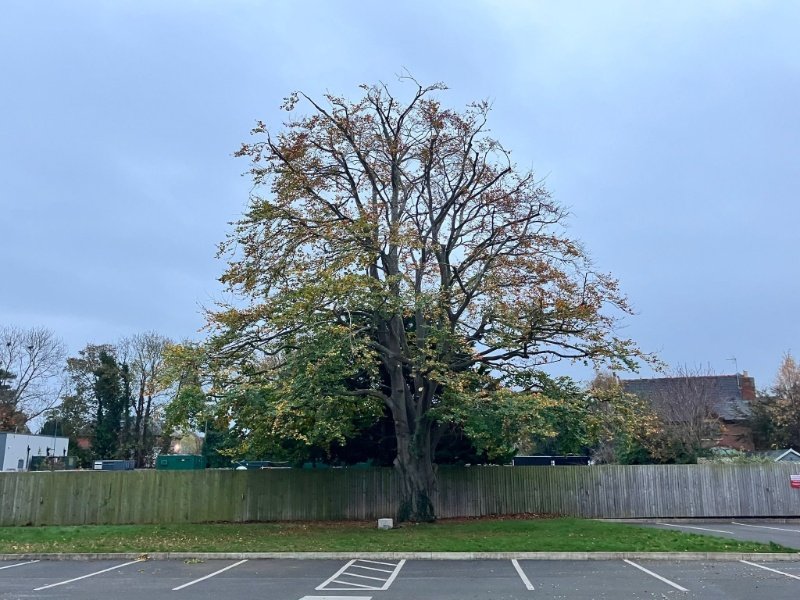
While high pruning is most often applied in woodland and forestry settings, it can also be useful in gardens and landscapes. For example, it’s sometimes used along newly established woodland boundaries, where shaping the growth of young trees helps create a stronger, more balanced treeline over time.
Professional High Pruning in North Wales
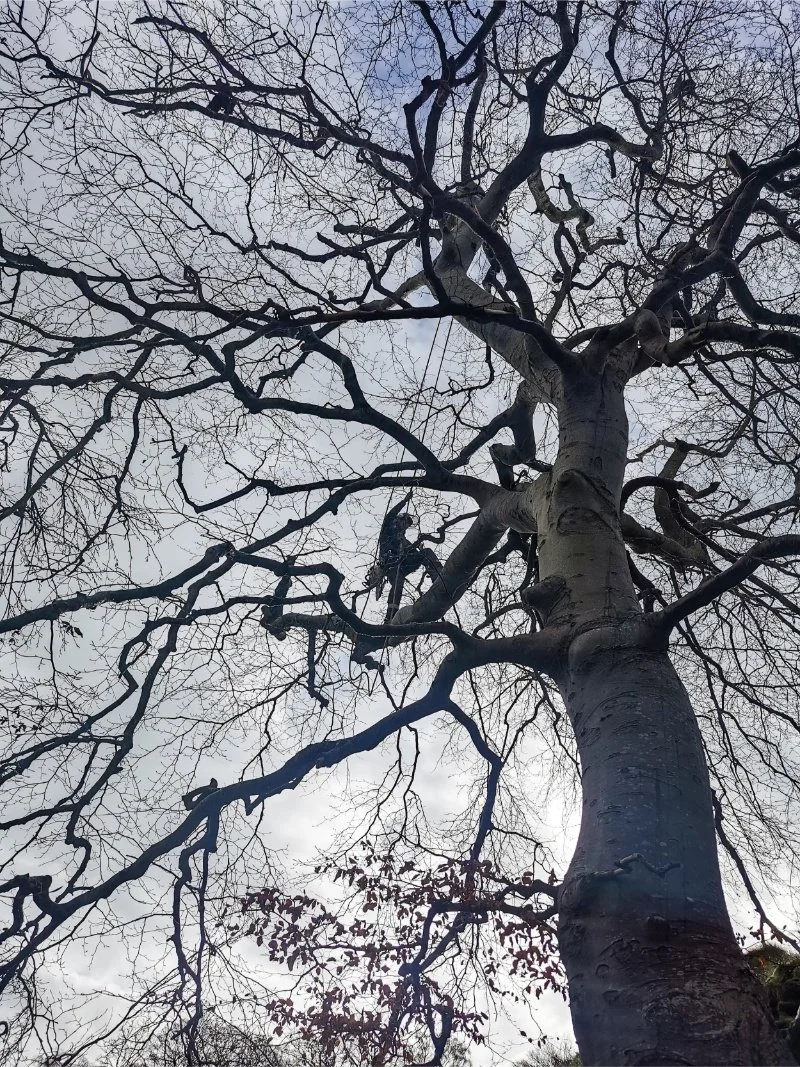
High pruning requires careful judgment to ensure the right balance between removing lower growth and maintaining a tree’s long-term health. Our qualified team carries out this work with precision and attention to detail, tailoring the approach to your site and objectives, whether you’re managing woodland for timber or shaping a garden boundary.
Contact us today to discuss high pruning or other woodland management services in North Wales.
See What Our Clients Say

Frequently Asked Questions
-
High pruning involves selectively removing the lower branches of a tree, usually while it is still young or developing. In forestry, the aim is often to produce a straighter stem with fewer knots, increasing the potential quality of the timber. It can also be used to shape young trees along woodland edges and in larger gardens or landscaped spaces.
-
Suitability depends on the species, age, condition and intended purpose of the tree. High pruning is generally most effective when carried out as part of a planned approach while selected timber trees are still developing. We’ll also consider how much live canopy needs to remain, as removing too many branches at once can reduce growth and place the tree under unnecessary stress.
-
Knots form where branches become enclosed within the growing trunk. By removing suitable lower branches at the right stage, the tree can lay down clearer wood around the stem as it matures. This can produce more valuable timber for uses such as construction or joinery, although the benefits depend on careful tree selection, good timing and consistent long-term management.
-
No. Although timber production is one of its main uses, high pruning can also help shape trees in private woodlands, estates, gardens and along newly planted boundaries. It may improve access or create a cleaner, more balanced treeline. The technique and intensity should always be adjusted to suit the setting and the reason for carrying out the work.
-
Yes, and this is often the most effective way to use it. High pruning can be coordinated with thinning, planting, access work and future timber extraction so that effort is focused on the best trees. Our woodland management and restoration service can help you identify suitable trees and plan the work over the longer term.